Pests under biological control: protecting our crops using entomopathogenic fungi
DOI:
https://doi.org/10.29267/biognosis.2025.2.4.19-26Keywords:
Agricultural pests, biological control , biopesticides, entomopathogenic fungi, sustainabilityAbstract
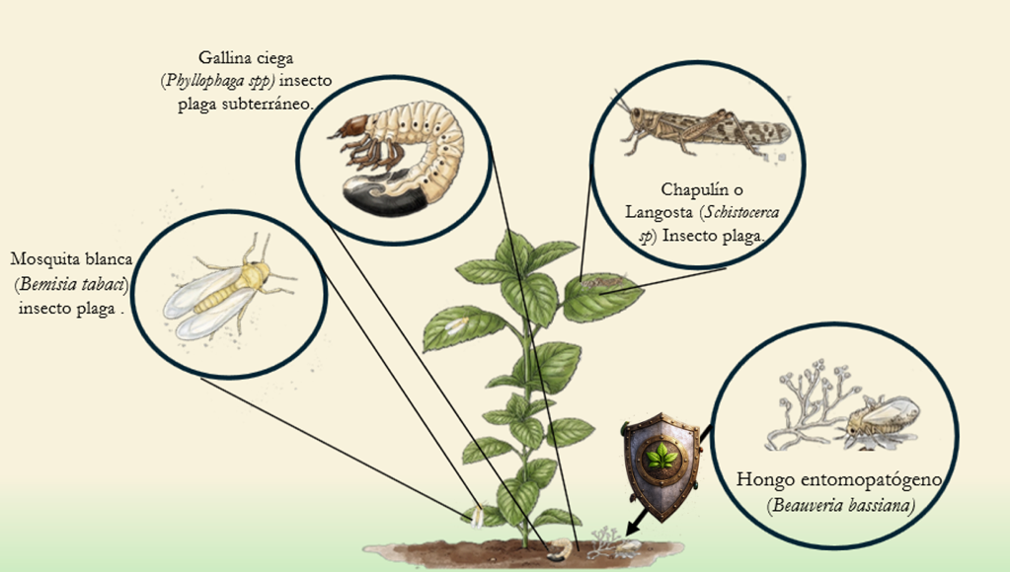
Biological control, as a sustainable alternative to hazardous chemical pesticides, aims to demonstrate how entomopathogenic fungi reduce damage to the environment and human health. These organisms infect insects considered pests in the agricultural sector, such as locusts, whiteflies, and the blind chicken. At the same time, they respect other insects that do not harm crops, such as bees, which are pollinators. Entomopathogenic fungi infect insects through a process of infiltration; subsequently, they reproduce and, through the production of toxins, eliminate the host. The use of biopesticides reduces environmental pollution, improves crop safety, and protects human health. However, their effectiveness depends on humidity, temperature, and the farmer’s training. It is worth mentioning that biological control does not eradicate pests but keeps them at manageable levels, which is also important for a healthy and sustainable environment.
 Síguenos en Facebook