Presence of chitin and chitosan in various organisms and the prominence of shrimp

Authors

DOI:

https://doi.org/10.29267/biognosis.2026.3.3.9-19

Keywords:

Biocompatibility, biodegradable, chitin, chitosan, circular economy

Abstract

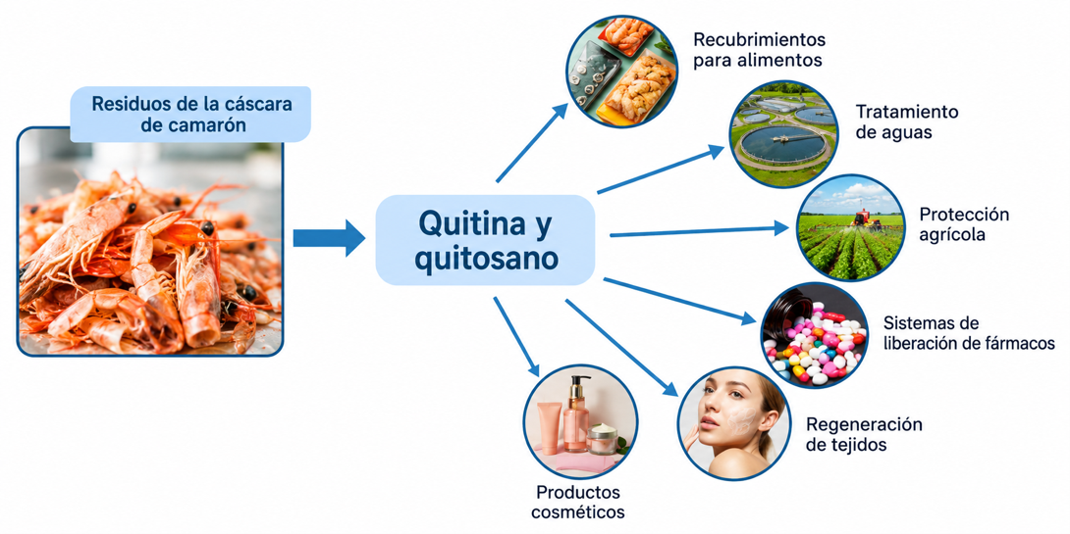
Shrimp and other crustacean remains, which normally end up in the trash, contain chitin, a natural material also found in insects and fungi. Due to its properties, chitin can be transformed into chitosan and used to produce useful and biodegradable materials. Both compounds, derived from shrimp remains, have applications in areas such as food packaging and drug delivery systems, among others. In this way, materials that were once considered waste can be transformed into valuable raw materials. Although challenges remain in using them more efficiently on a large scale, the conversion of chitin-rich materials represents a promising alternative for obtaining biodegradable products and reducing dependence on materials derived from non-renewable resources.
Author Biographies

María Guadalupe Sánchez-Otero, Facultad de Bioanálisis, Región Veracruz, Universidad Veracruzana

Industrial Pharmaceutical Chemist from the National Polytechnic Institute, Master of Science in Biochemical Engineering, and PhD in Food Science from the TecNM Campus Veracruz. Full-time Professor at the Faculty of Bioanalysis, Veracruzana University. Member of the National System of Researchers (SNII) Level I. PRODEP Desirable Profile. Founding member of the Mexican Network of Extremophiles. Research areas: Biotechnology of extremophilic microorganisms and extremozymes for industrial biocatalyst applications. Nutraceutical evaluation of fats and natural products. Vector-borne diseases.

Paulina Riaño-Ahumada, Maestría en Química Clínica. Facultad de Bioanálisis, Región Veracruz, Universidad Veracruzana

Clinical Chemist, student of the Master's Degree in Clinical Chemistry.

Deny de Jesús Velasco-Vique, Facultad de Medicina Veterinaria y Zootecnia. Universidad Veracruzana

Clinical Chemist, with a Master's degree in Animal Science and a PhD student in Agricultural Sciences.

Rodolfo Quintana-Castro, Facultad de Bioanálisis, Región Veracruz, Universidad Veracruzana

Biochemical Engineer from the National Technological Institute of Mexico with postgraduate degrees in Biochemical Engineering and a PhD in Food Science, Postdoctoral Fellow at the University of Illinois Urbana-Champaign. Researcher at the University of Veracruz and Professor at the Faculty of Medicine of the Cristóbal Colón University. Member of the National System of Researchers (SNII) and Professor with a Desirable Profile. Research areas: Molecular Biology of extremophile microorganisms; biotechnological applications for generating recombinant proteins for biocatalysis and biological control.

Published

2026-07-15