Mexico and the future of 2G bioethanol: Converting agricultural residues into energy through cellulase enzymes
DOI:
https://doi.org/10.29267/biognosis.2025.2.4.1-8Keywords:
Bioethanol 2G, cellulases enzymes, lignocellulosic residues, renewable energyAbstract
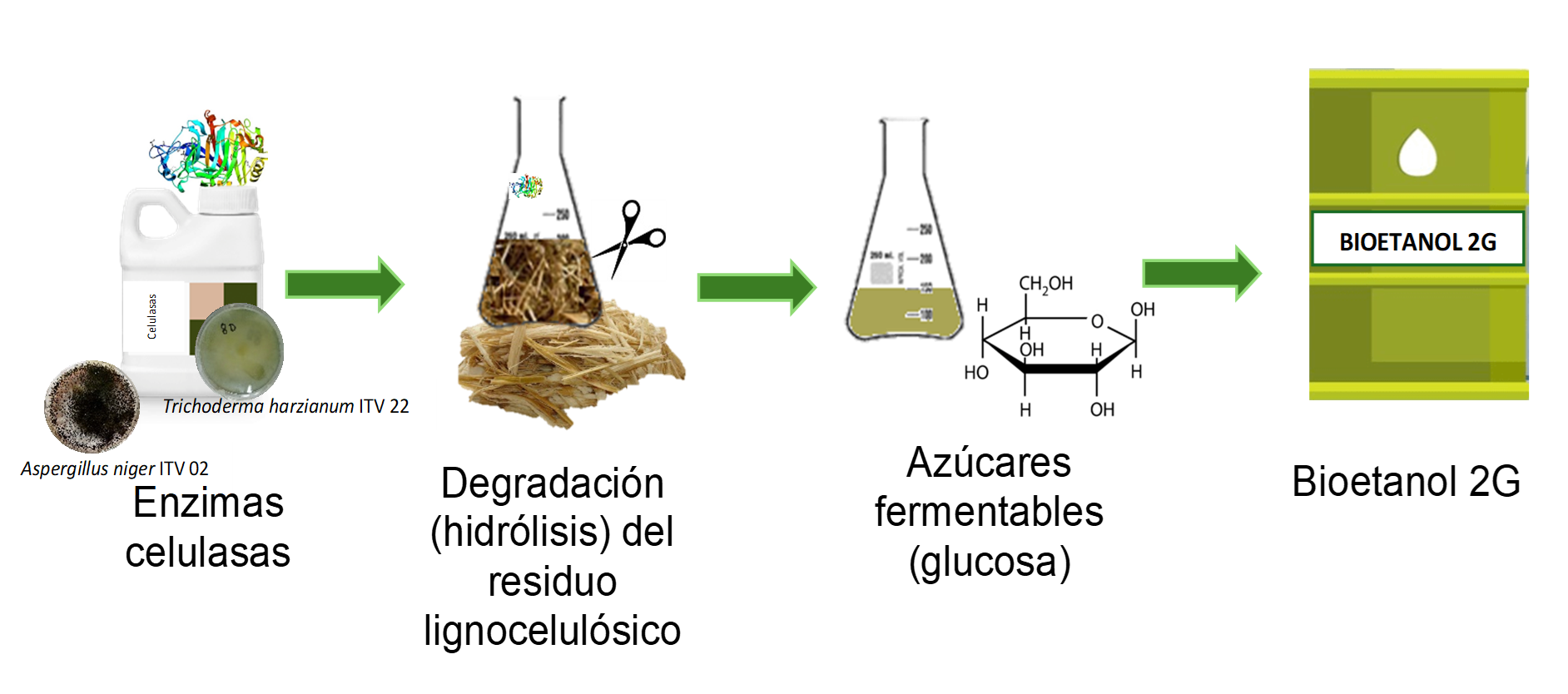
Second-generation (2G) bioethanol is produced from non-food lignocellulosic residues, such as bagasse, straw, and peels, unlike first-generation (1G) bioethanol, which is derived from sugar- or starch-rich crops. Mexico has significant potential for 2G bioethanol production due to the large amounts of agricultural residues from sugarcane, maize, and sorghum. The key limiting step in the process is the conversion of the residues into fermentable sugars using cellulase enzymes. These enzymes, produced by fungi such as Trichoderma reesei and Aspergillus niger, release glucose, which is subsequently fermented to bioethanol by Saccharomyces cerevisiae. Although native fungi can produce cellulases, their efficiency is lower than that of commercial enzymes, representing both an economic and technological challenge. Investment in research, microorganism optimization, and scale-up of enzyme production can enhance the utilization of lignocellulosic residues, boost 2G bioethanol production, and promote a circular economy with positive environmental and social impacts.
 Síguenos en Facebook